Pick 3D printing when the shape is detailed, precise or repeated. Pick foam carving when the piece is huge, simple and needs to be light. Pick fiberglass when you need a tough skin that will survive hard use for years. Plenty of good projects combine two of them, and the right answer depends on geometry, schedule, finish and where the piece will live.
The three processes in brief
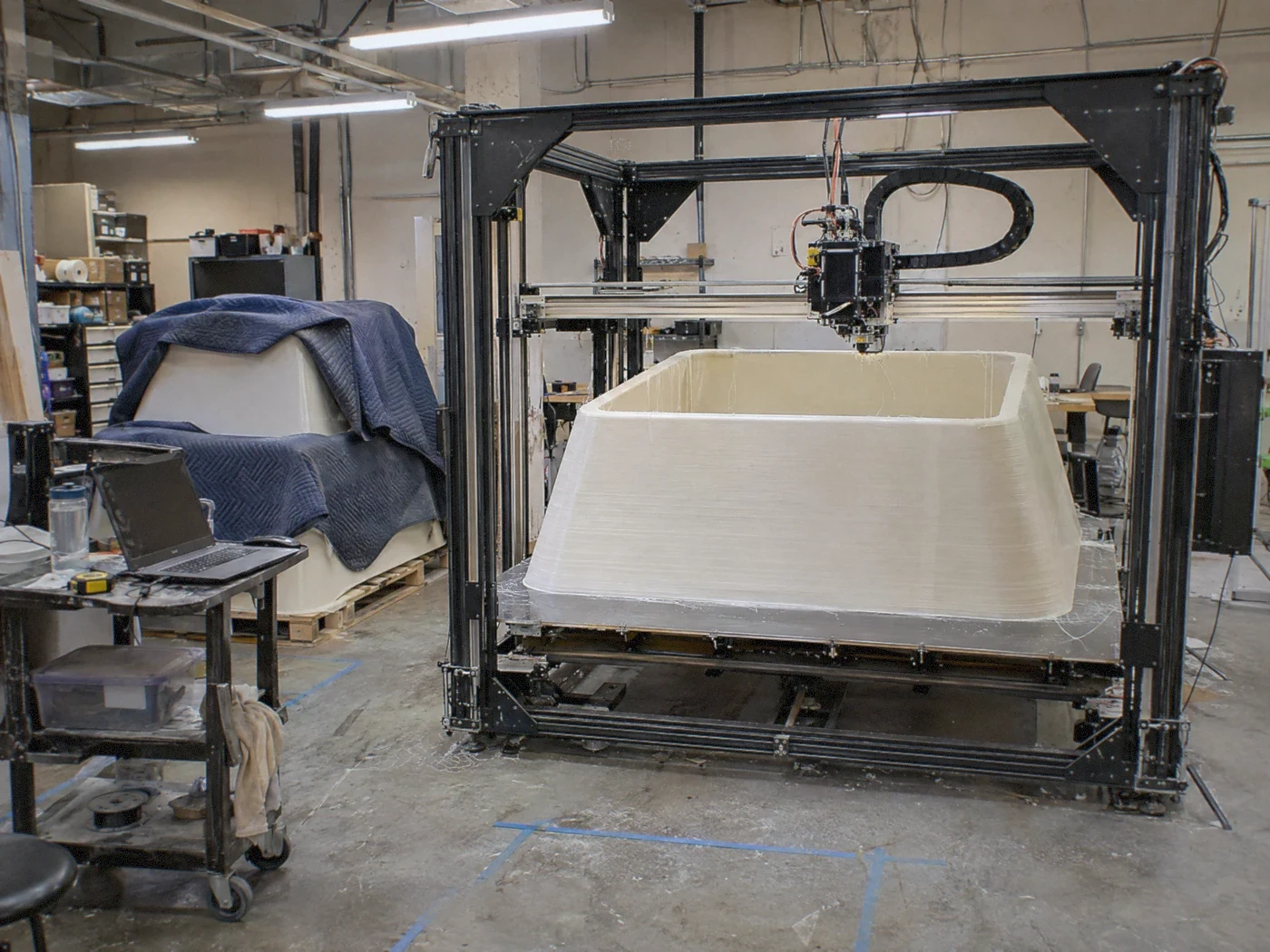
3D printing builds the object layer by layer straight from a digital model. Large pieces are printed as hollow shells in sections, then joined, filled, sanded, primed and painted. What you design is what you get, down to lettering, undercuts and crisp edges.
Foam carving starts with a block of EPS or similar foam and removes material, either with a CNC router or a hot wire. It is fast for big volumes and very light. The raw surface is soft, so it is usually hard-coated before paint.
Fiberglass is a skin of glass fiber and resin laid over a pattern or into a mold. It is strong and weather tolerant, and it suits pieces that will be bumped, leaned on or reused for years. It needs a pattern first, which adds steps.
When 3D printing wins
- Detail matters: logos, type, faces, textures, mechanical-looking parts or anything with sharp edges.
- Accuracy matters: the piece has to match a brand file, mate with another part or fit a fixed opening.
- You need more than one: printing the same file twice gives you two matching pieces, which helps for touring pop-ups or a pair flanking an entrance.
- The shape has undercuts or internal cavities that are awkward to carve.
- You want hidden features built in, such as cable channels, LED pockets, mounting points or access hatches.
The trade-off is section size. Large printed pieces are split into parts and joined, so seam planning is part of the design rather than an afterthought.
When foam carving wins
Foam is hard to beat for very large, soft-edged forms: clouds, rocks, giant fruit, rolling terrain. It is light enough to hang or move by hand, and big blocks can be roughed out quickly. Hot-wire cutting is ideal for straight-sided or ruled shapes such as block letters.
The limits are detail and durability. Fine edges and small text tend to soften, and bare foam dents easily. A hard coat fixes much of that but adds weight, time and its own finishing work. Foam is also less exact when a piece has to match a CAD file closely.
When fiberglass wins
Fiberglass is the workhorse for pieces that take abuse: long-term outdoor sculpture, theme-style props, things people lean on every day. The skin is stiff and tough and takes automotive-style paint well. If you need several copies of one shape, a mold keeps them consistent.
The catch is the pattern. Someone has to make the master shape first, by sculpting, carving or printing it, and then build the mold or lay up over it. That is extra time on a one-off, and resin work needs proper ventilation and space.
Hybrid builds are normal
The best large pieces often mix methods. A few common combinations:
- A carved foam core with printed detail parts, such as a giant shape with crisp printed lettering on the face.
- A printed pattern used to make a fiberglass mold, so you get print accuracy with a fiberglass skin.
- A printed shell over a steel or timber frame, so the print carries the look and the frame carries the load.
Side by side
| Factor | 3D printing | Foam carving | Fiberglass |
|---|---|---|---|
| Fine detail and type | Excellent | Fair | Good, depends on the pattern |
| Match to a CAD file | Very close | Approximate to good | Depends on the pattern |
| Weight | Light to medium (hollow shells) | Very light | Medium |
| Impact resistance | Good in PETG with a hard coat | Low bare, better hard-coated | High |
| Repeat copies | Reprint the file | Re-carve each one | Pull from a mold |
| Best for | Detailed, branded, precise forms | Huge, soft, light forms | Tough, long-life pieces |
Questions that decide it
- How close will people get? From across a room, foam can be fine. At arm's length or on camera, detail starts to count.
- Will anyone touch, sit on or bump it?
- Indoors or out, and for how long?
- Does it need to match brand artwork exactly?
- Does it have to fit through a door or into a freight elevator? Sectioning works differently for each process.
- Is it one piece or a set?
If you are not sure, send the brief anyway. Part of our job is telling you when printing is the wrong fit for the whole piece, or when one part of it should be made another way.
Where to start
See what we print and finish on our services page, then send drawings, a model or even a reference photo through the Start a print form. We will come back with a recommended approach and a quote for your project.